With the smart home craze sweeping the world, smart door locks, with their advantages of convenient unlocking and security protection, have become a popular category for entering the Thai market. For products that integrate wireless communication modules such as WiFi and Bluetooth, NBTC certification is an indispensable key step if they want to enter the Thai market in compliance with regulations. Below, we will provide a detailed breakdown of the core points of the NBTC certification for smart door locks in Thailand.

Why must smart door locks obtain the NBTC certification in Thailand? From a policy perspective, according to Thailand's Radio Communications Act, all radio transmitting equipment entering the Thai market must pass the NBTC mandatory certification. Uncertified products not only cannot be normally cleared and sold but may also face penalties. From a market perspective, the NBTC certification mark serves as proof that a product complies with local technical standards, which can enhance the trust of local consumers and help enterprises more smoothly expand into the Southeast Asian market.
Before applying for certification, the following materials need to be prepared in advance: For enterprise qualification category, it includes copies of the business licenses of the applicant and the manufacturer, as well as information on the Thai importer (who must have relevant import qualifications). The product data category includes both Chinese and English instruction manuals, technical specification sheets, circuit diagrams, block diagrams, bill of materials (BOM), six-sided product diagrams and internal structure diagrams. The relevant test materials need to provide the radio frequency (RF) test report and electromagnetic compatibility (EMC) test report issued by the NBTC-accredited laboratory. The certification certificates of key components also need to be prepared at the same time. In addition, there is a fully completed application form and a user manual in Thai (if applicable).
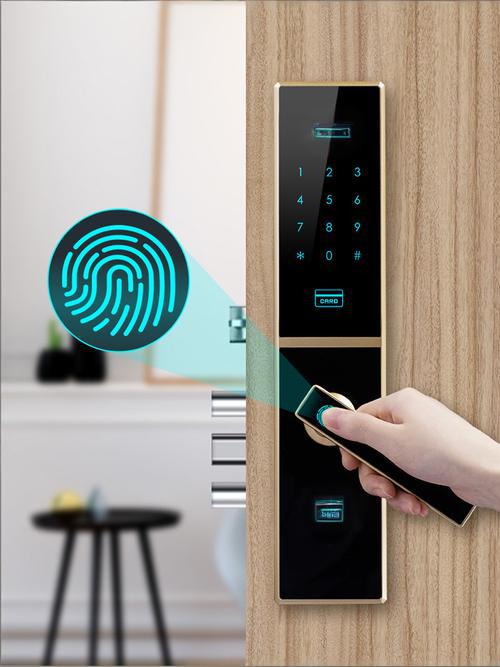
NBTC certification is not a simple process, and the core points need to be precisely controlled. First, there is the classification of certification types. Smart door locks usually fall into the category of Class B or SDoC. Class B can accept the conversion of international reports such as FCC and CE, and the process is more efficient. Secondly, there are key test requirements: the transmission power in the 2.4GHz frequency band should be ≤100mW, and it also needs to pass electromagnetic compatibility (EMC) tests to ensure stable operation in complex environments. In addition, localization requirements cannot be ignored. Product labels must contain Thai information, user manuals must provide Thai versions, and the voltage must be compatible with the 220V standard in Thailand.
The NBTC certification for smart door locks in Thailand is a necessary prerequisite for the product to enter the Thai market in compliance with regulations. The entire process from document preparation to certificate issuance requires professional control. ZRLK has extensive experience in NBTC certification services and can assist enterprises in organizing materials, connecting with tests, and following up on audits, helping products enter the Thai market efficiently and in compliance with regulations. If you have any needs for the NBTC certification of smart door locks in Thailand, feel free to consult us at any time.