Center Certification & Testing International
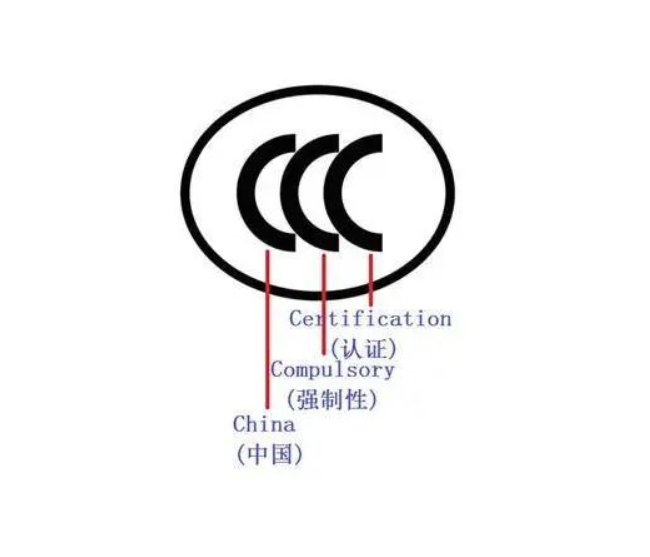
Nowadays, tablet PCs have become mainstream digital products for household use, study and office work, and the booming market demand has driven the vigorous development of the tablet battery production and sales industry. Meanwhile, market supervision has been continuously tightened, and product safety and compliance have become the cornerstone for enterprise survival. As a core component of tablet PCs, batteries pose potential safety hazards that directly affect user experience and are a key focus of regulatory inspections.
With the vigorous development of cross-border e-commerce, compact and portable Bluetooth speakers have become popular digital products for export to Japan. The Japanese market imposes extremely strict safety standards on imported electronic products, and the safety compliance of built-in batteries is a core assessment item for market access. Many foreign trade merchants often suffer from customs detention, failed clearance and store penalties due to neglecting PSE certification for batteries, thus missing out on market business opportunities. For enterprises exporting Bluetooth speakers, obtaining PSE certification for batteries is not an optional extra, but a basic prerequisite to take root in the Japanese market and operate in compliance with regulations.
As a best-selling product in South Korea’s maternity and children’s toy market, smart children’s remote control cars are widely loved by local families and kids for their fun operation, intelligent interaction and diverse appearances. They are also core products for Chinese toy enterprises expanding into South Korea’s cross-border market. South Korea has strict market access rules for such electrically operated and remote-controlled children’s toys. KC Certification is the only mandatory qualification for products to complete customs clearance and go on sale legally. Products without KC Certification are prohibited from circulation in South Korea, and this certification is also a basic requirement for entering local supermarkets and e-commerce platforms.
With the continuous boom of the cross-border audio and video market, wireless speakers have become a popular export product for Chinese foreign trade enterprises selling to the EU, thanks to their portability, wireless connectivity and wide application scenarios. Many enterprises tend to overlook one key point: wireless speakers are electronic products equipped with radio frequency (RF) wireless functions. To achieve smooth sales, customs clearance and distribution within the EU market, CE Certification is an indispensable mandatory compliance requirement. It also serves as a core qualification for passing random inspections by EU customs, entering e-commerce platforms and gaining shelf access in offline supermarkets.
Wireless electronics such as Bluetooth earphones, smart watches, Wi-Fi routers and drone controllers are widely used across consumer, household, industrial and medical sectors. As a prime North American destination for foreign trade, Canada mandates compulsory ISED IC Certification for all export wireless goods. Any device operating on 2.4GHz, 5GHz or other RF bands must complete this certification to gain legal sales eligibility.
With improved domestic electronic product supervision in China, power banks have been incorporated into China’s mandatory CCC certification catalogue. Products without valid certification are prohibited from factory release, domestic sales and import/export, hence CCC becomes a mandatory prerequisite for manufacturers to start compliant production and expand market business. Many small and medium-sized producers encounter test failure and delayed certification due to unfamiliar application rules. The following sorts out document checklist and full certification workflow for faster certification acquisition.
Chinese wireless mouse manufacturers must secure IMDA certification to export products to Singapore. Under local regulations, all mice equipped with 2.4GHz RF modules require official IMDA registration for smooth customs clearance and sales in physical supermarkets and online stores; non-certified commodities will be detained and banned from selling, making IMDA the primary market entry barrier for Singapore exports. Many factories face delayed shipment due to incomplete paperwork or improper certification operation. This article sorts out document requirements and application workflow to help manufacturers obtain certification efficiently and develop Singapore’s consumer market.

ANATEL is Brazil’s exclusive regulatory authority for telecommunication compliance. All smart glasses embedded with Wi-Fi, Bluetooth and other RF communication modules must obtain mandatory ANATEL certification; uncertified items are denied customs clearance and domestic sales in Brazil. For domestic Chinese smart glass manufacturers, proper document preparation and familiarization with certification rules effectively shorten certification lead time and lower modification costs, which is the prerequisite to expand markets in Brazil and Latin America.
Learn the latest exciting content
Tik Tok